




Artificial Intelligence
I was reading about A.I. for our class discussion when a realization hit me. A.i. is suppose to be a machine that will help people, machines having their own capability of thinking..
The thing is, I begin to wonder.. what will this do to us again? As we see the effects of previous invention.. we are now suffering from it(though not all). full of regrets and dispute.yet we also feel enslave by it since we cannot stop using it... for an example is the plastic bag.. they should have thought first of the components of the material since its not really earth friendly -- non biodegradable--- .... and now.. no matter how hard they try to change plastic bags to paper bags.. it cannot be done since people find plastic bags more disposable and useful compared to paper bags which can be destroyed by liquid alone. imagine using that and all your items from the grocery store are ice cold drinks... the paper bag would have proven itself useless.. the thing about humans is that.. once they set their goal..they do not look beyond the effects of their to other lives. so long as they are able to see their goal.. they devote their life into achieving it.. which is not at all bad.. but all am trying to say here is that.. we should be more careful of our goals. think not only of ourselves but also of others.
(draft... not yet furnished )


The Sun and The Fellow

SPATTY


innere medizin


The Sunset Lover


Doc, since you cannot go here. I took the pleasure of taking this for you. i hope you love it. Imagine yourself looking at this as the winds blows.. your feet rested on an elevated stool and the aroma of coffee taking over your nose as you inhale it... :j
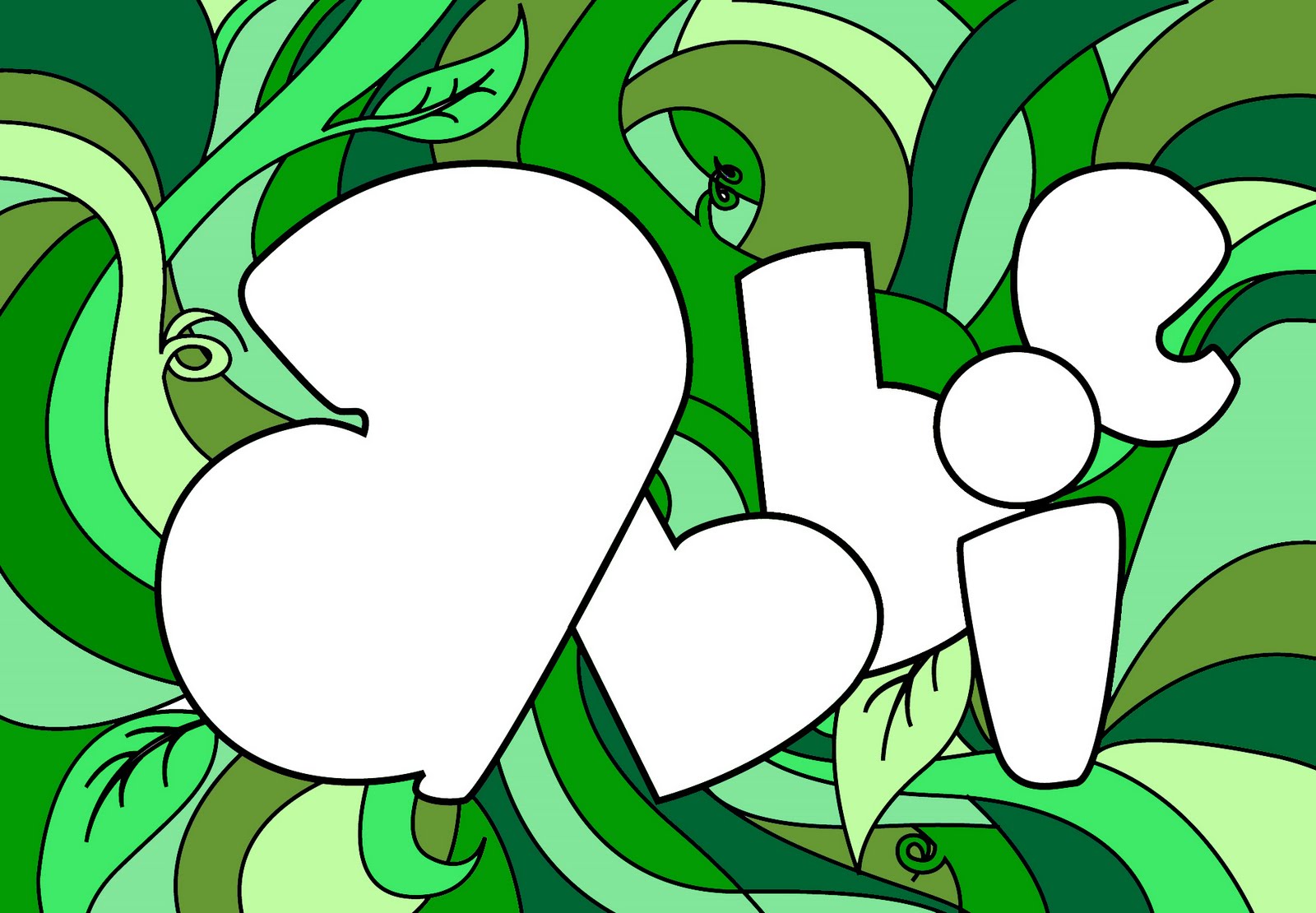
T-shirt design for Chong Hua Hospital, Internal Medicine


Doc, this is what I have come up with so far. The back portion is on its way. I hope you like it. I was trying to incorporate the idea of Chong Hua Hospital to the totality of it. Am having trouble combining cute and serious at the same time. And so I came up with a typography with something cute in it. If there are changes that you'd like me to do, puhlease do not hesitate to put it in the comment box here. Am open for suggestions. The color is white, since you are still undecided on the color of the shirt. Color can be easily changed. :) if anything more, you know how to contact me. iloveyousomats! i miss you so mats!!! uwi na!!!


The War Within
The War Within
Our decisions make us. We become who we are because of the decisions we make. They are mirrors of our persona. In truth, they become determinants of our destinies and futures.
We cannot escape them. We cannot do without them. Many times, we try to avoid them for more often than not, they exact a toll of pain and discomfort we could very well do without. But doing so, as we have by now learned, brings about consequences that make things worse. A decision not made is often regretted. A decision delayed becomes more painful in the making.
It is here that we realize the inevitability of decisions in life – along with the internal conflict that each decision brings. It is also here that we come to know fighting with one’s self in arriving at a decision helps us discover who we really are, helps us understand better the persons we are.
When faced with that “fork in the road” when a choice must be made, our minds and hearts go to work – which path is better, the one well taken, perhaps easier, or the one less taken, more uncertain and perhaps riskier. The quality of “better” as far as decisions are concerned is really subjective. What one perceives as “better” defines his uniqueness, his difference from others.
This inner struggle and the long road to a decision that must be made is what the hurting, wistful, and self-searching man in the poem Tonight I can write the saddest lines by Pablo Neruda faces.
And what a decision it is. For it involves the most salient of all human emotions – love, or in this case, the loss of it. He honors his lost love by grieving over it. But his grief threatens to shackle him to the past, to keep him chained to the martyrdom of a tragic lover forever pining for something that is lost and gone. The choices are there: to let go and move on, or to stay in that dark corner of loneliness, choosing “loyalty” to the haunting images and memories of what once was.
For one removed from the emotional entanglement of any decision, it is easy to make the rational choice. But for one caught in it, the experience of deciding is torment and agony itself.
What makes a decision so difficult? The dilemmas may all boil down to these: the perception that available solutions are almost of equal value or desirability, the tension of opposites personified by the never-ending tug of war between the mind and the heart, or a collision of interests, that of the person and that of affected others.
There was a point in my life where I too was faced with such decision. It is not just about thinking ahead and then go with which ever path favors you. It is never as easy, because what is easier may not really be the course your heart would be willing to take. The choices were either I would move on and have a better life or lament on a dying relationship. The clear choice was moving on, contrary to what people encouraged me to do, I stood still and watch myself be devoured by destruction. I felt satisfaction in the pain that I was in, for I know to myself that I was not ready.
“I loved her and sometimes she loved me too.” (6) The man was not such a fool. He did know that there was imbalance in the relationship, that he deserved more than what he was getting – being loved when the woman perhaps only felt like it. Yet, he gave back love that was consistent and unconditional. Did he love himself less by loving her more? Was he torn between the classic decision horns of want versus need? He needed to love himself more but wanted to have her, despite the punishing relationship she brought along. How many decisions have been rendered full of anguish by the pulls of want and need? The failure to distinguish one from the other has left many caught in a constant state of craving and disappointment. Was his ego at play here, to prop up his identity and manhood at the expense of self-respect? Only he can accurately describe or perhaps justify his willingness to accept the way things were. And perhaps tell us now whether he is able to see the line between want and need.
Reason versus emotion, the heart versus the head, the eternal human battle fought day in and day out – the stuff of life itself. The man who says he can write the saddest lines is not spared this at all. Rather, he is thrust into the very core of this controversy.
“My soul is not satisfied that it has lost her” (30) – almost a classic human cry of lost love through the ages. It still resounds today. The man knows that it is over. Reason tells him that while he is allowed to lick his wounds, he should move on and let time start the healing process of forgetting. But while reason prods him, his emotions hold him fast. He clings on, to memories and old longings. Emotions anchor him down and he knows this, stating his continuing love for the vanished one. The very fact that sadness rules him, that he can write the saddest lines, betrays his choice.
Dale Carnegie, that renowned author, would have told him – Know the facts, make a decision, act on it. Dale would have told him that while he indulged his heart, it was time for the head to come in and restore the balance of things. Knowing the facts implies a function of the head for the heart can easily overrule facts. But even Dale would have known that when it comes to decisions involving love, his three-stage saying would be up against formidable opposition. For love dwells in the territory of the heart itself and the head is but an intruder. Which is why the cliché “go with your heart” usually wins out in the end. It is also usually the more popular choice for everyone sympathizes with the one who goes where the heart leads, and usually castigates the one who uses the head as a cold, heartless fish unworthy of love at all.
But it is not in love alone where the struggle between the heart and the mind takes place. Rather, it occurs practically everywhere in life. In the end, the defining factor is which one the person chooses. For one seeking to know himself or herself more, finding out which is valued and followed more – the head or the heart – reveals volumes.
A collision of interests also muddles up the decision process for many. Personal interest versus the common welfare, in other words. “I no longer love her, that’s certain, but maybe I love her” (27). A study in contradiction, how can the words “certain” and “maybe” coexist in a common context? When they manifest themselves in this manner, they show an agony of confusion. For our lover in the poem, his choice of the heart is becoming clearer with each line. It is in his interest to dwell on his pain, to extend the mourning over his loss, even deify or exalt his lost love. Common interest on the other hand tells him that he should move on. Moving on will improve strained relationships with others uneasy and unsure of how to relate to a man mooning over lost love. And moving on becomes a practical choice not only because it will redound to the good of others but because in the end, it does him good too.
Many decisions are made because the impact and effect on others important to the person are considered. The issue of the man and his relationship with others is unclear in the poem since his struggle takes place in the setting of solitude. But transposing him to practical and normal life would necessarily bring others out of the shadows and tells us that a person can know more of himself or herself from interaction with others who provide him mirrors to his true self.
Whatever choices are made, whatever decisions are adopted, whether the heart or the head wins, in the end, there is always some degree of clarity that emerges, clarity in the matter of a person’s values and clarity in some facet of the personality.
And it is also clear that a person has to throw himself into the struggle of decisions to find out the answers to questions important to him. It is by doubting one’s self, seeing and accepting one’s limitations, and knowing what can and cannot be changed that one grows and understands himself better.
This is something the man in the poem has yet to discover. His romanticism rules him for the moment and perhaps when the veils of emotion lift, he may come to see with greater clarity all that has been clouded by the heavy mists of memories and unrewarded longings.

Blindness
attribute of today's realization
ANSWER
for him, whom ever I loved most.
post balemtimes
| want or expect something: to have a wish to get or do something or for something to happen or be true, especially something that seems possible or likely |
| 1. | confident desire: a feeling that something desirable is likely to happen |
| 2. | likelihood of success: a chance that something desirable will happen or be possible |
| 3. | wish or desire: something that somebody wants to have or do or wants to happen or be true |
| 4. | source of success: somebody or something that seems likely to bring success or relief |
| 5. | trust: a feeling of trust (archaic) to day its all about trust and hope. i love this day. despite the wrong interpretation, despite the KABOOM of anger, and despite very tragedy, I stand triumphant and ever trusting, ever hoping. :) Thank you. |
02.05.10


